Jump to a section
- What Are All-on-4 Dental Implants?
- How All-on-4 Differs from Traditional Dental Implants
- The All-on-4 Procedure: Step by Step
- Who Is a Good Candidate for All-on-4?
- All-on-4 vs. Traditional Dentures
- How Much Do All-on-4 Dental Implants Cost in Huntington Beach?
- Recovery Timeline: What to Expect After Surgery
- Caring for Your All-on-4 Implants
- Frequently Asked Questions About All-on-4
- Why Patients in Huntington Beach Trust Our Practice for All-on-4
- Take the Next Step Toward a Permanent Smile
If you have been living with failing teeth, uncomfortable dentures, or gaps that make it difficult to eat and speak with confidence, you are not alone. I am Dr. Richard Baldwin, DMD, and after decades of practicing dentistry right here in Huntington Beach, I want to walk you through one of the most life-changing treatments I offer: All-on-4 dental implants.
This guide covers what the procedure involves, how it compares to dentures and conventional implants, what recovery looks like, and what to expect in terms of cost. If you are still comparing every replacement option, start with our main dental implants in Huntington Beach page.
What Are All-on-4 Dental Implants?
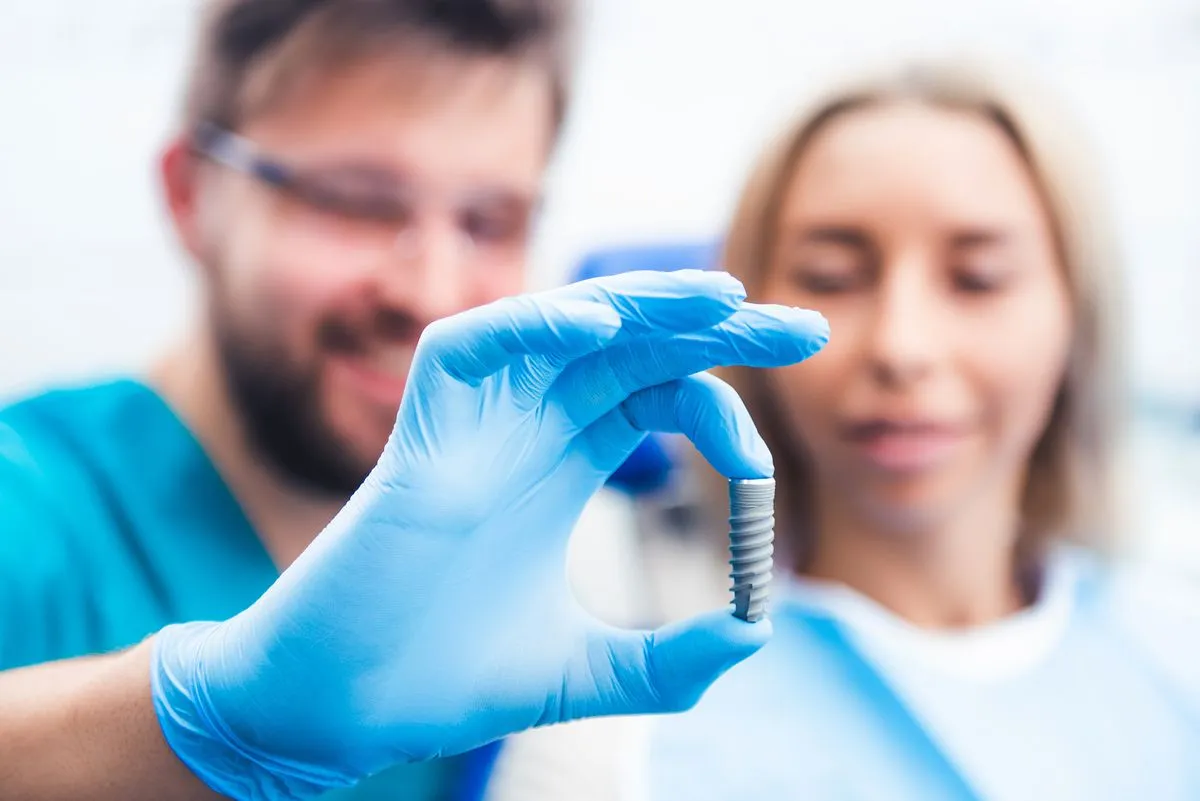
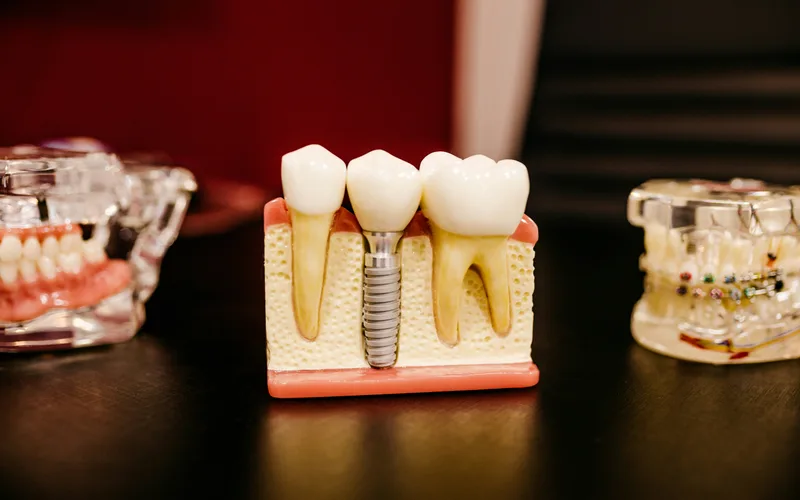
All-on-4 is a full-arch implant technique that replaces an entire row of upper or lower teeth using just four titanium implants. Rather than placing one implant per missing tooth, All-on-4 anchors a complete, fixed prosthetic bridge onto four precisely angled posts.
Two implants are placed vertically in the front of the jaw where bone is naturally thicker. The remaining two are tilted at roughly 45-degree angles toward the back. That angulation maximizes contact with available bone, often allowing patients to receive implants without bone grafting — even when bone loss has occurred.
The result is teeth that look, feel, and function like your own. They are permanently fixed — you brush them, floss around them, and never remove them at night. For patients who have struggled with traditional removable dentures that slip or limit what they can eat, that permanence is transformative.
How All-on-4 Differs from Traditional Dental Implants
If you have already started researching dental implants, you may be wondering how All-on-4 fits into the bigger picture.
Conventional Implant Approach
With traditional implants, each missing tooth is replaced by an individual implant topped with a crown. When most or all teeth are missing, this can require eight or more implants per arch, multiple surgeries, bone grafting, and a timeline that stretches well beyond a year.
The All-on-4 Advantage
All-on-4 can reduce the number of implants needed to support a full arch, and angled rear implants may reduce the need for grafting in selected cases. Some suitable patients can receive a temporary fixed prosthesis on the day of surgery, but that decision depends on the surgeon’s assessment and the stability achieved during placement.
HB Dentist coordinates restorative planning and follow-up with the oral surgeon who performs the surgical placement. Your written treatment plan should identify which provider performs each phase and what is included in the quoted fee.
The All-on-4 Procedure: Step by Step
Understanding what to expect at each stage helps reduce anxiety and lets you plan your schedule around treatment.
Step 1: Comprehensive Evaluation
We take 3D cone-beam CT scans of your jaw to evaluate bone density, nerve locations, and sinus proximity. We review your medical history, discuss your goals, and determine whether All-on-4 is the right fit.
Step 2: Custom Treatment Planning
Using your 3D imaging, we digitally plan the exact position, angle, and depth of each implant before we ever pick up an instrument. This digital-first approach improves accuracy and shortens surgery time.
Step 3: Surgery Day
The surgical visit takes place at the oral surgeon’s office. If remaining teeth need extraction, that may be handled during the surgical phase. The implants are then placed according to the coordinated plan. If the surgeon determines that immediate loading is appropriate and the implants have adequate stability, a temporary fixed prosthesis may be attached that day. An individualized plan will explain the anesthesia approach, expected appointment length, and alternatives if same-day loading is not appropriate.
Step 4: Healing Period
Over the next three to six months, the titanium implants fuse with your jawbone through a process called osseointegration. During this time you wear the temporary prosthesis and can eat, speak, and smile normally — though we recommend softer foods for the first few weeks.

Step 5: Final Restoration
Once the implants have fully integrated, we craft your permanent prosthetic teeth — custom-designed for your face shape, skin tone, and bite alignment using high-strength materials like zirconia. The final bridge is secured onto your implants, and your transformation is complete.
Who Is a Good Candidate for All-on-4?
All-on-4 dental implants in Huntington Beach are an excellent option for patients who:
- Are missing all or most teeth in one or both arches
- Have teeth that are severely decayed, cracked, or failing
- Wear removable dentures and want a permanent, fixed solution
- Have been told they lack sufficient bone for traditional implants (angled placement often works where conventional implants cannot)
- Are in generally good health without uncontrolled conditions that impair healing
Patients who smoke heavily or have certain autoimmune conditions may need additional evaluation. We will be straightforward about whether All-on-4 is a safe choice for your situation.
All-on-4 vs. Traditional Dentures
Many patients come to us after years of wearing conventional dentures. The comparison below highlights why so many choose to make the switch. For a deeper dive, read our guide on dental implants vs. dentures.
| Feature | All-on-4 Implants | Removable Dentures |
|---|---|---|
| Stability | Fixed to implants; stability depends on integration and prosthesis design | Rests primarily on gums; fit and stability vary |
| Removal | Removed by a dental professional when service is needed | Removed by the patient for cleaning and overnight care |
| Chewing | Fixed support designed to improve function | Function depends on fit, anatomy, and adaptation |
| Bone response | Loads bone around integrated implants | Does not replace missing tooth roots |
| Maintenance | Daily cleaning under and around the prosthesis plus professional recall | Daily removal and cleaning plus professional recall |
| Longevity | Components can provide long-term service but may need repair or replacement | Relines, adjustments, and eventual replacement may be needed |
| Palate coverage | Design varies; many upper fixed arches leave the palate uncovered | A conventional upper denture commonly covers the palate |
| Speech | Adaptation varies with design, fit, and healing | Adaptation varies with design, fit, and anatomy |
All-on-4 is a fixed full-arch option with different surgical, maintenance, and cost considerations from removable dentures. An examination is needed to compare the options for an individual patient.
How Much Do All-on-4 Dental Implants Cost in Huntington Beach?
Cost is one of the first questions patients ask. In the Huntington Beach and Orange County area, All-on-4 dental implants typically range from $15,000 to $25,000 per arch. That range depends on several factors:
- Whether extractions are needed before placement
- Prosthetic materials selected (acrylic vs. zirconia)
- Surgical fees
- Any supplementary procedures such as bone recontouring
While the upfront investment is higher than removable dentures, the long-term value favors All-on-4. Dentures need periodic relining, replacement every several years, and do nothing to stop the bone loss that changes your facial appearance over time.
Our post on dental implant costs in Huntington Beach breaks down pricing in detail. We also offer flexible financing so cost does not have to stand between you and a permanent smile.
Recovery Timeline: What to Expect After Surgery
Recovery from All-on-4 surgery is more manageable than most patients anticipate.
Days 1-3
Mild to moderate swelling and tenderness are normal. Most patients manage discomfort with over-the-counter or prescribed pain medication. We recommend rest, ice packs, and a soft-food diet — smoothies, yogurt, scrambled eggs, and mashed potatoes.
Days 4-14
Swelling subsides steadily. Many patients return to work within a week. You can introduce slightly firmer foods, though you should still avoid anything hard or crunchy.
Weeks 3-6
Most patients feel close to normal. Follow-up appointments let us monitor healing and adjust the temporary prosthesis as needed.
Months 3-6
Osseointegration completes. Once imaging confirms the implants are fully fused with your jawbone, we fabricate and place your permanent teeth.
Your treatment plan will explain what temporary tooth option is available during healing. A same-day fixed temporary may be possible for suitable patients, while other cases may require a different temporary solution or a healing period before loading.
Caring for Your All-on-4 Implants
Maintaining All-on-4 implants is straightforward:
- Brush twice daily with a soft-bristle or electric toothbrush, paying attention to where the prosthesis meets the gumline.
- Use a water flosser to clean underneath and around the bridge.
- Avoid excessively hard foods like ice or hard candy — the same advice that applies to natural teeth.
- Keep regular dental appointments. We recommend visits every six months for professional cleanings and implant checks.
Implants and their prosthetic teeth can provide long-term service, but longevity varies with health, hygiene, bite forces, smoking, and maintenance. Components may eventually need repair or replacement.
Frequently Asked Questions About All-on-4
How much do All-on-4 dental implants cost in Huntington Beach?
In the Huntington Beach and Orange County area, All-on-4 dental implants typically range from $15,000 to $25,000 per arch. Your final cost depends on whether extractions are needed, the materials selected, the surgeon’s fees, and any supplementary procedures.
Do All-on-4 implants require bone grafting?
Often, no. The two angled rear implants maximize contact with available bone, which can help many patients avoid bone grafting even when some bone loss has occurred.
How long does recovery take after All-on-4 surgery?
Most patients follow a soft-food diet during the first few weeks and many return to work within about a week. Full osseointegration, when the implants fuse with the jawbone, usually takes three to six months.
How long do All-on-4 dental implants last?
Implants and their prosthetic teeth can provide long-term service, but longevity varies with health, hygiene, bite forces, smoking, and maintenance. Components may eventually need repair or replacement.
Can I get teeth the same day as implant surgery?
Some suitable patients may receive a temporary fixed prosthesis on the day of implant surgery. Immediate loading depends on the surgeon’s assessment and implant stability, so it cannot be promised before evaluation.
Why Patients in Huntington Beach Trust Our Practice for All-on-4
With more than four decades serving this community, I coordinate implant planning, restoration, and follow-up with the oral surgeon who performs the surgical phase. We use clinical examination and available imaging to build an individualized plan and explain the responsibilities of each provider before treatment begins.
Take the Next Step Toward a Permanent Smile
If you are tired of loose dentures, failing teeth, or gaps in your smile, All-on-4 dental implants may be the solution you have been looking for. The best way to find out is a one-on-one consultation where we evaluate your situation, answer every question, and walk you through your options.
Call HB Dentist in Huntington Beach at (714) 536-2571 or schedule a dental implant consultation today. A confident, permanent smile may be closer than you think.
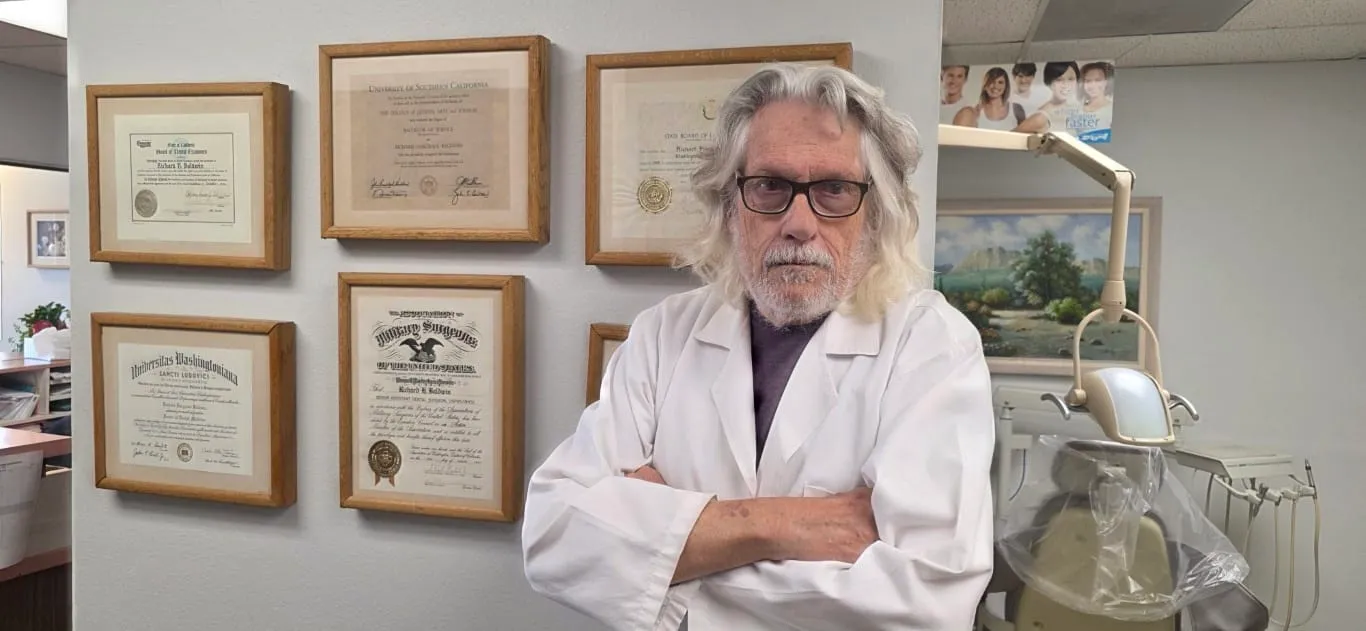
Written and clinically reviewed by Dr. Richard Baldwin, DMD General & cosmetic dentist in Huntington Beach since 1979 · Washington University School of Dental Medicine · Updated
Sources & further reading
- Dental implants — American Dental Association · MouthHealthy
- Dental implant surgery — American Association of Oral and Maxillofacial Surgeons
- Gum disease and implant health — American Academy of Periodontology
This guide is general dental information from a practicing dentist, not a diagnosis. Treatment recommendations and costs are confirmed at an in-person exam.